
Udbodhan Karyalaya
An Unbroken Legacy in Print since 1899
The Udbodhan Karyalaya — the publishing house of the Ramakrishna Order at Bagbazar — grew from a single press bought in 1898 into a magazine that has run since 1899 and a catalogue of some three hundred books. This is where the work began, and why.
The beginning of the work
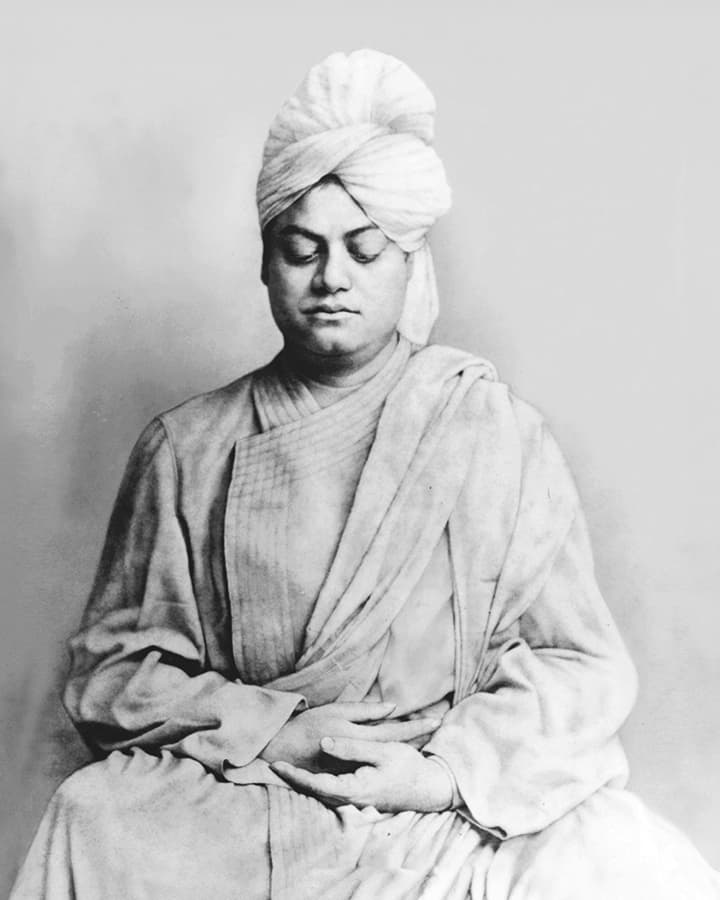
Swami Vivekananda first returned from the West on 26 January 1897, setting foot on the Indian mainland at Pamban and reaching Kolkata on 20 February. That same year, on 1 May, he founded the Ramakrishna Mission. He had long been alive to the need for a literature to carry the new message — encouraging the periodicals his devotees were starting in America and England, prompting the Brahmavadin through Alasinga in Madras, and steadily urging on Swami Trigunatitananda, who wished to bring out a magazine in Bengali.
Toward the end of 1898 a press was bought and installed in Girindralal Basak's house at 14 Ramchandra Maitra Lane, in Kambuliatola — the first Udbodhan office. The press was named the Udbodhan Press. From here, edited by Swami Trigunatitananda, the first number of Udbodhan appeared on 14 January 1899 (1 Magh 1305) as a fortnightly.
Swami Trigunatitananda was at once the magazine's editor and the manager of its press and office, with Swami Shuddhananda as his assistant. He rendered Swami Vivekananda's English lectures and writings into Bengali for the pages of Udbodhan, and these were later issued as books. In time the writings of Swami Brahmananda, Swami Saradananda and other monastic and lay authors joined them, and the magazine and office together became a genuine working centre for the ideals of Ramakrishna and Vivekananda.
The name, and the life-mission
The magazine's name was Swami Vivekananda's own choice, and so was the line that runs across its cover — a call from the Katha Upanishad that he made famous.
উত্তিষ্ঠত জাগ্রত প্রাপ্য বরান্ নিবোধত
Arise! Awake! And stop not till the goal is reached.
He also wrote the prospectus of the first issue, and in it set out the magazine's purpose at length. India, he wrote, is the heir of one god-like race of the ancient world; Greece was another, whose thought Europe still inherits. When these two great currents — India's spirituality and the West's mastery of the outward world — have met in the past, a fresh wave of civilisation has risen and the bonds between peoples have grown stronger. Now, he declared, the centre is India: the marriage of India's inner knowledge with the West's worldly learning is the ideal of the new age, and it is India that must lead the world to it. From that conviction the magazine took its charge.
এই দুই শক্তির সম্মিলনের ও মিশ্রণের যথাসাধ্য সহায়তা করা ‘উদ্বোধনের’ জীবনোদ্দেশ্য।
To aid, as far as it can, the meeting and blending of these two forces — that is the life-purpose of Udbodhan.
Vivekananda knew the moment was also a dangerous one: that in the meeting of the two, India's long-gathered treasure might be swept away, and the country lose itself in mere pursuit of enjoyment or in hollow imitation of foreign ways. The safeguard, he taught, was to make our "father's wealth" — India's highest thought — live again in our own lives, and to hold it always before the people. It is to this work that the magazine and the books of Udbodhan have been bent from the first; that is the office's reason for being.
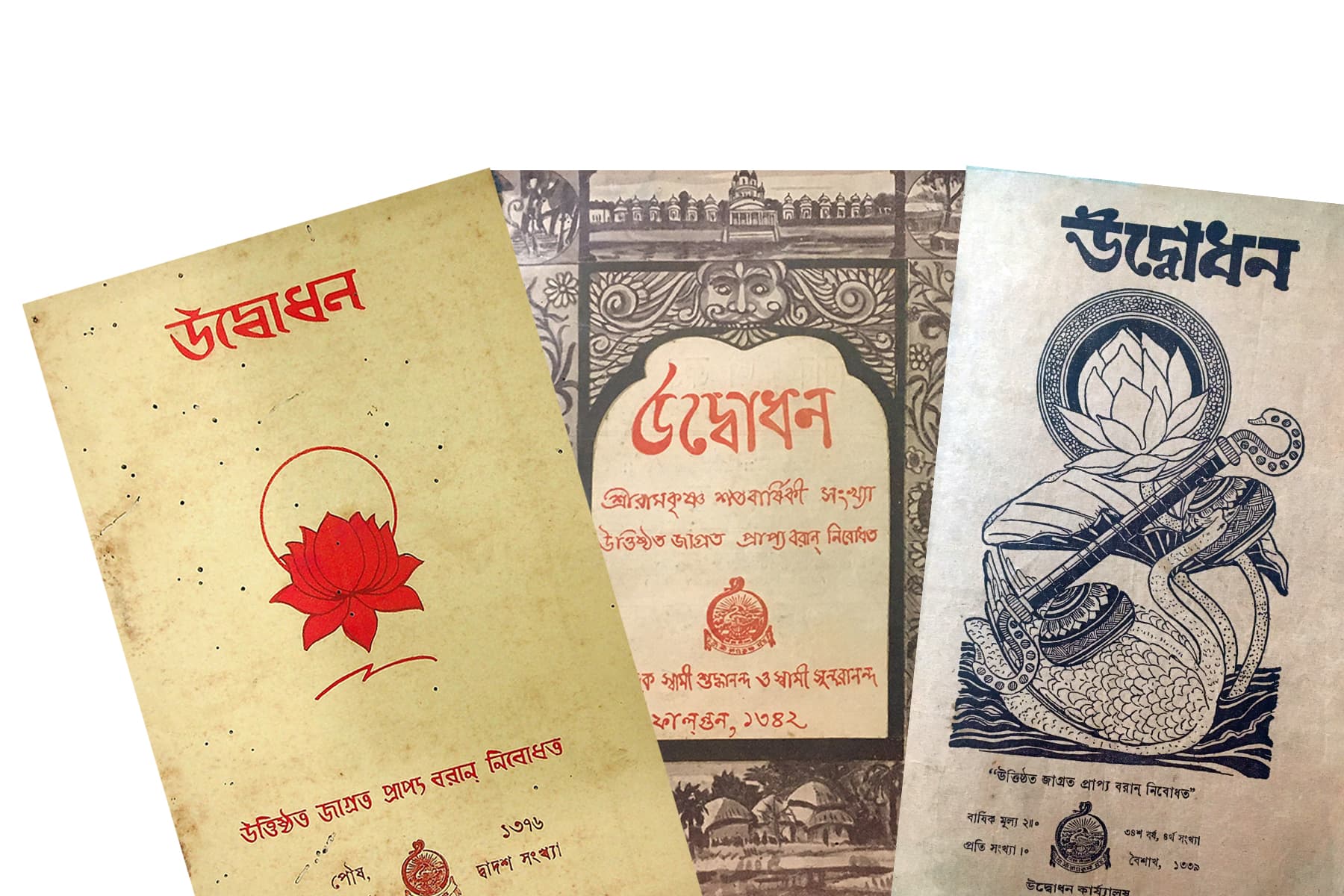
The Udbodhan Patrika
Udbodhan has appeared without a break since 1899 — one of the longest-running Bengali magazines. It began as a fortnightly and, from its tenth year, became the monthly it has remained ever since.
The early years were not easy. From the first year to the eighteenth issue of the fourth year the magazine was printed on its own press; when circumstances forced the press to be sold, printing was arranged at various other presses. Swami Trigunatitananda, the first editor and Udbodhan's first publisher, also carried the running of the office. When he left for America in 1903, the magazine's very survival was in doubt. The crisis was met through Swami Brahmananda's earnest wish and Swami Saradananda's efforts: Swami Shuddhananda was given charge of editing and publishing, and under his devoted, capable hand the work went on steadily. From this time Swami Saradananda became closely bound to Udbodhan, and when the office moved in 1908 to its own newly built house at 12 and 13 Gopal Chandra Niyogi Lane, he took its direction fully into his own hands.
The magazine's editorship has passed through a long succession of Swamis — Trigunatitananda, Shuddhananda, Saradananda and many after them — recorded in full in the book's appendix. By an order of the Belur Math authorities, for many years the head of the Holy Mother's House served ex officio as editor of Udbodhan; from 1400 (Bengal era) the editorship was made a separate charge.
The book publication division
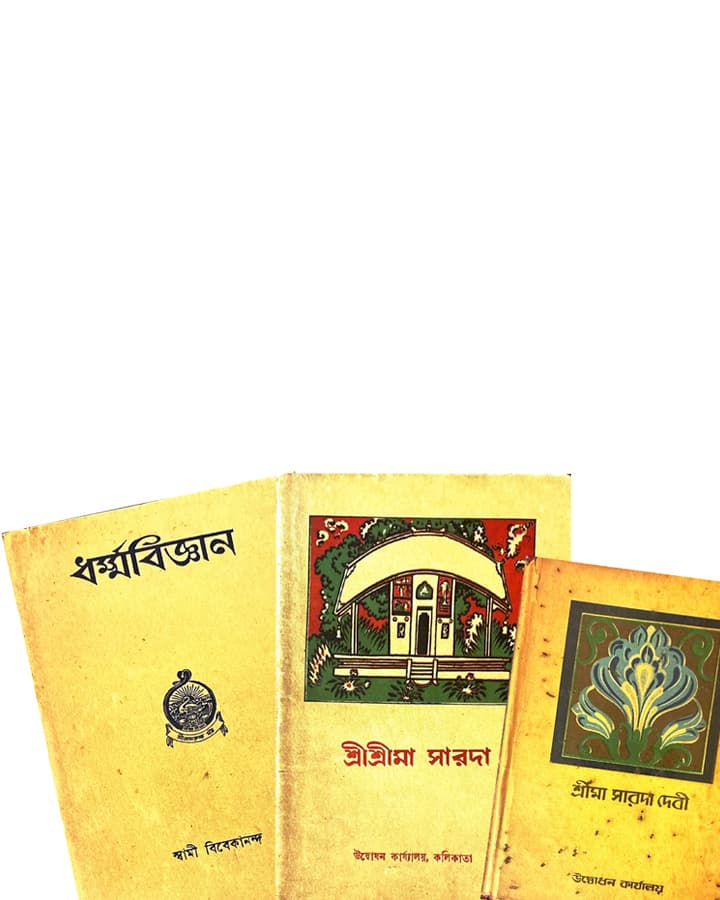
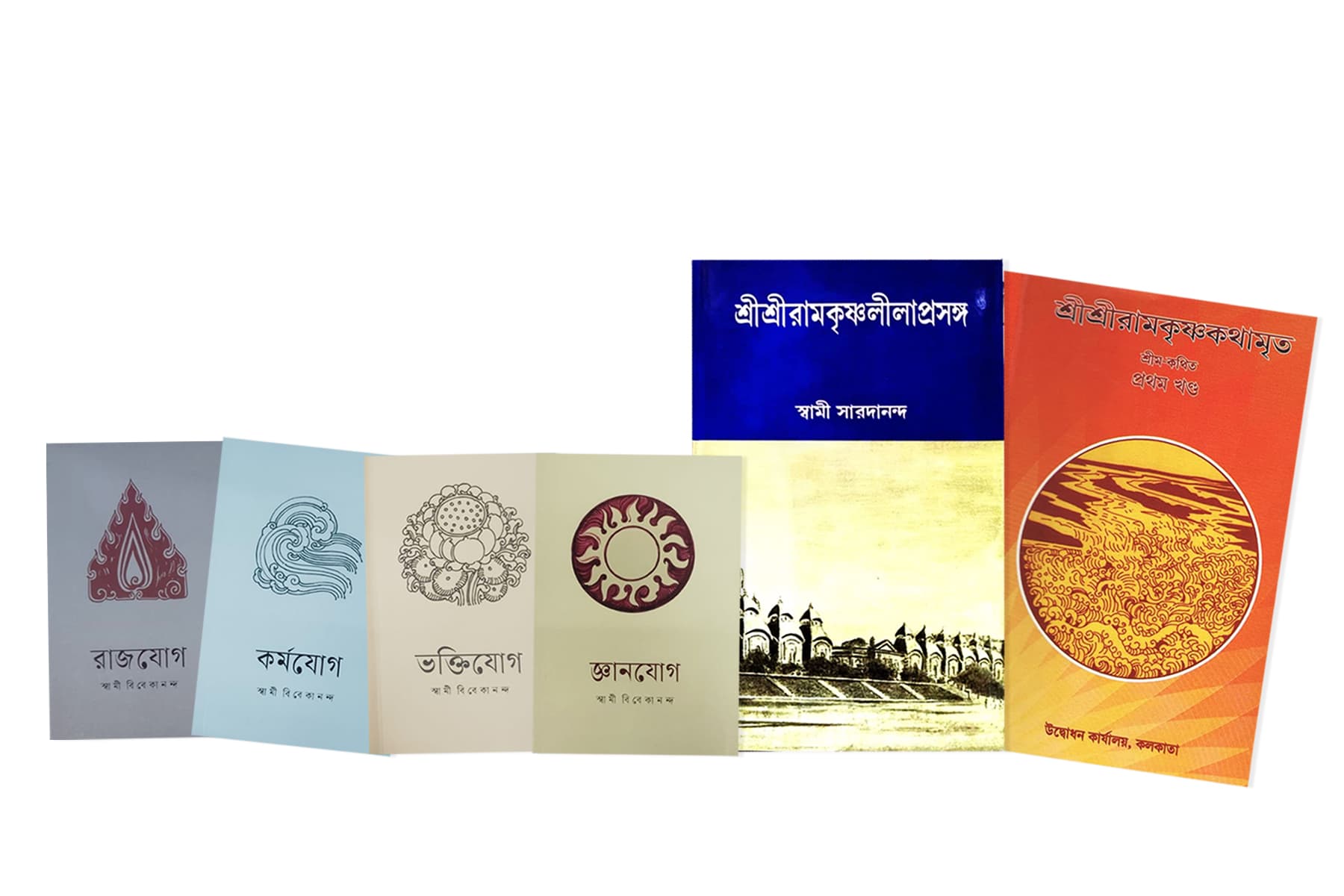
From Udbodhan, Swami Vivekananda's message, life and other writings appeared first as articles in the magazine and then as books. The first book the office published was Swamiji's Rajayoga, in Baishakh 1306 (1899); Bhaktiyoga and Karmayoga followed in 1900. These were translated from Swamiji's own English works — the English Karmayoga having come out from New York in February 1896, Rajayoga from England that July, and Bhaktiyoga first from Madras in 1896. Once the Bengali translations were out, Udbodhan began publishing the English editions as well; in 1910 The Master as I Saw Him was issued from England and Udbodhan at the same time. By 1308 (1902) the office had brought out, in both Bengali and English, Swamiji's Rajayoga, Karmayoga, Jnanayoga, Bhaktiyoga and Chicago Lectures, together with his Letters and Conversations — and, soon after its serialisation in the magazine, his original Bengali work Prachya o Pashchatya (East and West).
Much of this rests on the labour of Swami Shuddhananda, whose contribution to these publications is beyond forgetting. From the beginning he helped with the magazine and, almost single-handed, translated nearly the whole body of Swamiji's English writings into a Bengali both faithful and graceful; the Bengali Vivekananda that readers know owes much to his gift and tireless work.
The office's other landmarks followed. The first volume of Sri M's Kathamrita appeared in 1902. Swami Saradananda's Sri Sri Ramakrishna Lilaprasanga, the authoritative life of the Master, stands among Udbodhan's unforgettable achievements — a trustworthy biography and, in its own right, a treasure of Bengali letters. To these were added Yuganayak Vivekananda, Sri Ma Sarada Devi, Sri Ramakrishna Bhaktamalika and many more; the Kathamrita itself has been re-issued arranged by date and furnished with indices. In recent years the four-volume Vedanta Darshan and Bishwachetanay Sri Ramakrishna, among others, have come out. Since the founding of the Advaita Ashrama and the Madras Math, the English-language Ramakrishna–Vivekananda titles are published chiefly from there; from Udbodhan itself some three hundred books have now been printed and published. Brahmachari Ganendranath, long associated with the division as publisher, did much over the years to raise the standard of the printing and the choice of covers.
The home of the work
The office moved as the work grew. It began in Girindralal Basak's house at 14 Ramchandra Maitra Lane; after his death it shifted, in November 1906, to 30 Bosepara Lane, and in November 1908 into its own newly built house at 12 and 13 Gopal Chandra Niyogi Lane. Because that building had Gopal Chandra Niyogi Lane on one side and Mukherjee Lane on the other, its address became 1 Mukherjee Lane — the lane later renamed Udbodhan Lane. From 1908 the centre came to be known by the twin name "Sri Sri Mayer Bari o Udbodhan Karyalaya," and Swami Saradananda took charge of it as its head.
As the stream of devotees and the volume of publishing outgrew even those rooms, a separate building was needed. A plot was bought only about two hundred feet from the Holy Mother's House, during Swami Jnanatmananda's headship, and on it a four-storey building rose in stages under successive heads — begun by Swami Nityaswarupananda, its third floor largely completed by Swami Bishwashrayananda, its fourth by Swami Hiranmayananda. The office was moved here, at a cost of more than twelve lakh rupees.
Today that building holds the whole apparatus of a publishing house: on the ground floor the office, the head's room, the book-sales room, the book godown and the accounts room; on the first floor the magazine's subscription, collection, advertisement and proof-correction departments, and a great hall named for Swami Saradananda where the readings and discussions are held; on the second floor the editor's and editorial offices with the editor's quarters and a public library; and the top floor given over entirely to the residence of the monks.
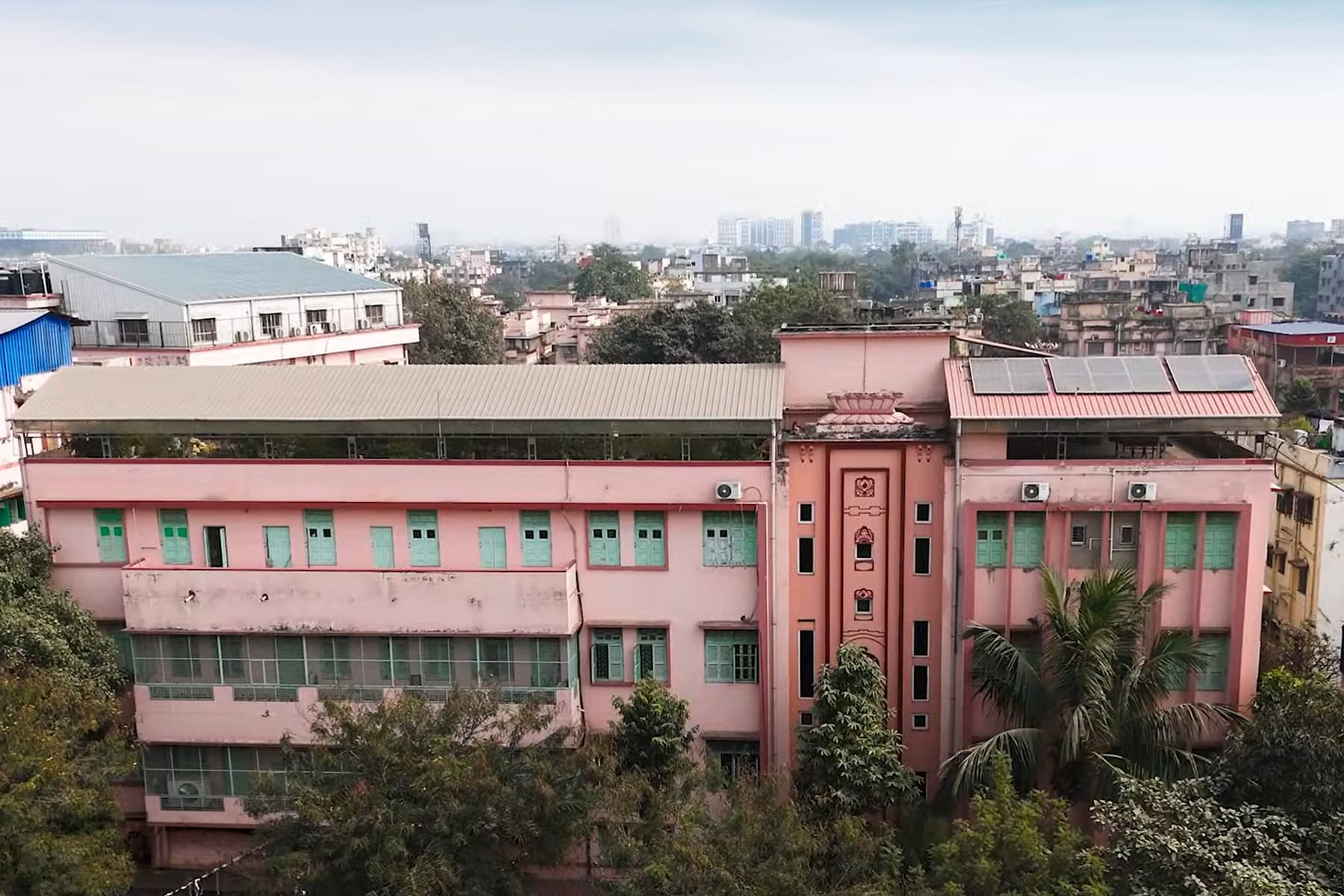
Spreading the Ramakrishna–Vivekananda ideal
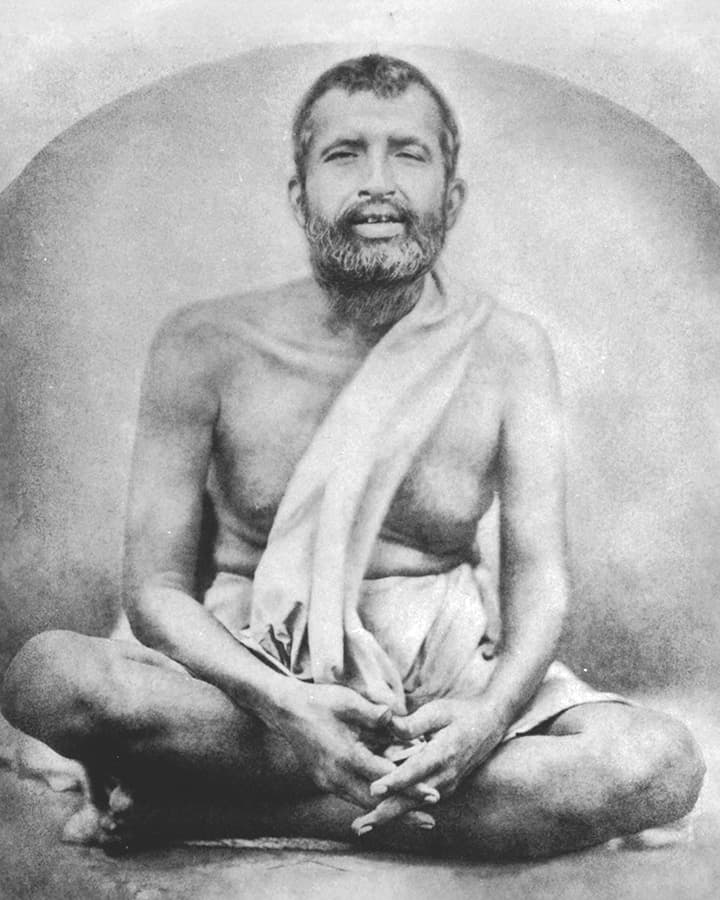
Swami Vivekananda held that the welfare of humanity lay along a single path: the blending of the West's energy and its learning in art and science with India's spirituality, and that of all the nations India alone was fitted to give that ideal a living form and set it before the world. His love for India was at root a love for the world; he understood that for the sake of all humanity India must stand firm in her own greatness, and he warned in the plainest terms of what would be lost to civilisation itself were she to fail.
It was to this end that the Udbodhan office set itself from its founding in 1899, and it counts the right to serve the nation in this way its glory. The task, the book observes, is far from finished — perhaps more needful now than ever, when many borrowed ideals tempt the country away from its own. The office's prayer for itself is plainly stated: that Udbodhan may keep shedding a quiet light like the moon's, stand firm as the Himalayas against every obstacle, and hold unmoved to its own high tradition, so that its onward path may grow ever easier, simpler and more fruitful.